
Event Review — Ximénez-Spínola Brandy & Pedro Ximénez Pairing
On the evening of April 15th, James J. Fox Dublin curated a highly focused and intellectually satisfying tasting dedicated to the singular house of Ximénez-Spínola. Hosted in the intimate setting of McCloskey’s Pub, the event explored the intersection of Pedro Ximénez expressions and premium Cuban cigars, framed through a lens of precision pairing rather than casual indulgence.
The structure of the evening was deliberate and progressive. Beginning with a lighter cigar introduction and advancing toward deeper, more layered combinations, the tasting demonstrated a clear narrative: how oxidative sweetness, acidity, and oak integration interact with tobacco combustion and evolving cigar profiles.
Special acknowledgment is due to Yiorgos Manesis, whose invitation and hosting elevated the evening with both technical insight and a genuine enthusiasm for the subject matter.
Opening Pairing — Calibration of the Palate
The evening opened with the H. Upmann Half Corona, a format known for its accessibility and immediate aromatic delivery.
This cigar established a clean baseline: light cedar, toasted grain, and subtle creaminess. Its relatively short format allowed for a rapid development of flavour without overwhelming the palate,an ideal calibration tool before introducing the more complex fortified wines and brandies to follow.
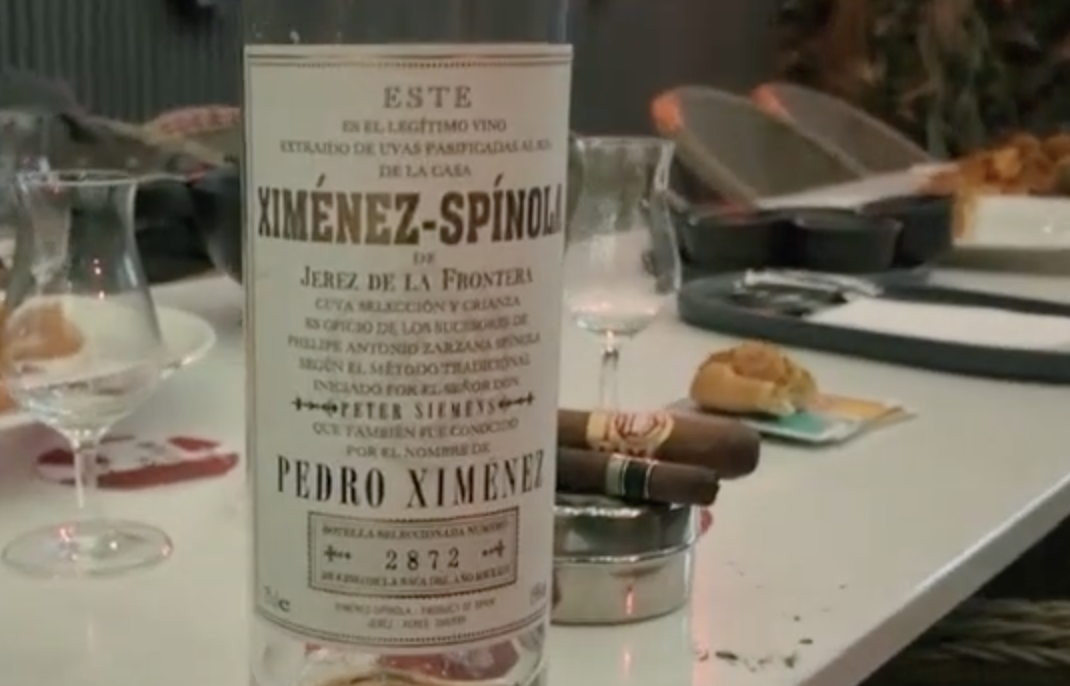
Ximénez-Spínola “Este” Pedro Ximénez & H. Upmann Connoisseur No. 2
The transition to the Ximénez-Spínola “Este” Pedro Ximénez marked a significant elevation in density and aromatic complexity.
Tasting Profile — “Este” PX
Nose: Intense raisin, fig paste, molasses, and polished wood
Palate: Viscous and concentrated, with layers of dates, dark honey, espresso reduction, and a notable balancing acidity
Finish: Long, coating, yet unexpectedly lifted by a fine acidic spine
When paired with the H. Upmann Connoisseur No. 2, the interaction became particularly compelling.
Pairing Analysis
The Connoisseur No. 2 introduces a more refined and expansive flavour architecture:
Creamy smoke texture
Notes of roasted nuts, light spice, and subtle floral tones
The PX did not simply add sweetness, it amplified structure. The wine’s acidity cut through the cigar’s creaminess, preventing palate fatigue, while its sugar concentration enhanced the cigar’s nutty and toasted characteristics.
Crucially, the pairing avoided the common pitfall of PX dominance. Instead, it achieved dynamic contrast: sweetness versus dryness, viscosity versus smoke, resulting in a layered, evolving tasting experience.
Ximénez-Spínola Cigars Club No. 2 Brandy — In-Depth Tasting
The highlight of the evening was the Ximénez-Spínola Cigars Club No. 2 Brandy, a spirit explicitly engineered for cigar pairing.
Tasting Profile
Nose:
Immediate richness—dried figs, sultanas, dark caramel, and antique oak furniture. There is also a refined volatility, suggesting careful distillation and integration rather than raw alcohol presence.Palate:
Exceptionally smooth entry. The texture is silky, almost glyceric, yet structured. Flavours unfold in layers:Burnt sugar and toffee
Oxidised wine notes
Cocoa, espresso bean, and a faint hint of tobacco leaf
The mid-palate reveals its true sophistication: a balance between oxidative depth and freshness, avoiding the heaviness often associated with PX-derived spirits.
Finish:
Long, warm, and persistent. Notes of dark chocolate, charred oak, and dried fruit linger, with a subtle dryness that prepares the palate for the next draw of the cigar.
Brandy & Cigar Interaction
With the H. Upmann profile still present in the palate memory, the Cigars Club No. 2 demonstrated why it is purpose-built for this context.
Pairing Mechanics
The brandy’s oak-driven spice and caramelisation mirrored the cigar’s combustion notes
Its residual sweetness softened the smoke, rounding any sharp edges
The alcohol warmth enhanced retrohale aromatics, intensifying perception without overpowering
What distinguishes this pairing is its symmetry. Unlike the PX, which contrasts and elevates, the brandy integrates. It becomes an extension of the cigar rather than a counterpoint.
Conclusion
This event succeeded not merely as a tasting, but as a structured sensory study. It demonstrated two distinct pairing philosophies:
Contrast (+ Connoisseur No. 2): tension, brightness, and dynamic interplay
Integration (Brandy + cigar): harmony, continuity, and textural alignment
The choice of H. Upmann cigars was particularly elegant, balanced, and sufficiently nuanced to engage with such expressive pairings without being overshadowed.
Overall, the evening stood as a compelling case for the depth of Spanish fortified wine and brandy when applied within the cigar context. It moved beyond indulgence into something closer to curated sensory architecture, precise, intentional, and deeply rewarding.
