
Pinarica Coffee: Reforesting Cuban Coffee Culture from the Hills of Pinar del Río
In the westernmost reaches of Cuba, beyond the tobacco fields that have made Pinar del Río legendary among cigar aficionados, another agricultural story is quietly unfolding. It is a story rooted in shade-grown coffee, ecological restoration, rural employment, and cultural continuity. That story is Pinarica Coffee.
Born from a vision to connect Cuban coffee culture with the global premium cigar community, Pinarica Coffee represents far more than a beverage brand. It is an agricultural, social, and environmental initiative centered around the Viñales region of Pinar del Río — one of the most visually striking and culturally important landscapes in the Caribbean.
The project combines traditional Cuban coffee-growing methods with modern sustainability principles, while simultaneously investing in rural communities suffering under severe economic strain, emigration, and infrastructural collapse.
The result is a coffee that is not only distinctive in flavor, but deeply connected to land, people, and place.

The Origins of Pinarica Coffee
Pinarica Coffee was founded by Andrew Ryan after observing an interesting cultural and commercial phenomenon during travels throughout the Middle East. In cigar lounges across the region, coffee was frequently paired with cigars in environments where alcohol consumption was less central to the experience.
Ryan recognised a compelling gap in the market: while Cuban cigars are internationally revered, Cuban coffee remained largely absent from premium pairing culture outside Cuba.
As he later explained publicly:
“I thought there'd be an idea there to have a Cuban coffee to go with their Cuban cigars.”
From the outset, the project received support from the Cuban Embassy in Ireland and Cuban agricultural stakeholders. The ambition was not simply to import coffee, but to showcase a terroir-specific expression of Cuban coffee culture.
What emerged was reportedly the first single-origin export coffee from Pinar del Río — a region globally associated with premium tobacco rather than specialty coffee.
Pinar del Río: Cuba’s Agricultural Crown Jewel
Pinar del Río occupies a near-mythical place in Cuban agriculture. Located in western Cuba, the province contains the Viñales Valley, famous for its limestone mogotes, fertile red soils, tropical microclimates, and centuries-old farming traditions.
While the region is best known for tobacco cultivation, coffee has also been grown there for generations, often in small mixed agricultural systems beneath native tree canopies.
Pinarica’s coffee is cultivated in the hills west of Viñales, in terrain characterised by:
rich mineral soils,
significant biodiversity,
tropical humidity,
high-altitude microclimates,
and dense natural shade cover.
The project places enormous emphasis on preserving this ecosystem rather than replacing it with industrial monoculture methods.

Shade-Grown Coffee and Ecological Philosophy
One of the defining characteristics of Pinarica Coffee is its commitment to shade-grown cultivation.
The coffee plants are grown beneath native Piñón Florido and Carob trees, creating a multi-layered agroforestry system that mimics natural forest ecology rather than conventional plantation agriculture.
According to project materials:
“Shade grown means a slower ripening fruit. Also it allows for more biodiversity and less fertilizer and insecticide use.”
This approach has several profound implications.
1. Slower Maturation and Flavor Complexity
Coffee cherries ripen more slowly under shade conditions. This extended maturation period often allows for:
greater sugar development,
more balanced acidity,
improved aromatic complexity,
and enhanced body.
Pinarica notes that the resulting beans produce more nuanced and layered coffee compared to high-yield industrial systems.
2. Lower Yield, Higher Quality
The project openly acknowledges the economic tradeoff:
“About 400 kgs per hectare, rather than 2,000 kgs per hectare for intensively grown coffee.”
This is a dramatic reduction in production volume compared with sun-grown commercial coffee operations. However, the lower yield supports higher ecological integrity and superior cup quality.
3. Biodiversity Preservation
The agroforestry canopy creates habitats for birds, insects, pollinators, and native flora. This reduces dependency on chemical interventions while contributing to broader ecosystem resilience.
4. Natural Climate Regulation
Shade trees help moderate temperature extremes, preserve soil moisture, and reduce erosion — increasingly important factors in a climate-stressed Caribbean region.
Reforestation After Hurricane Ian
In September 2022, Hurricane Ian caused catastrophic damage across western Cuba, particularly in Pinar del Río. Agricultural infrastructure, tobacco fields, homes, forests, and electrical systems were devastated.
Pinarica Coffee incorporated ecological recovery directly into its operational model.
The project began replanting native Piñón Florido trees specifically to restore canopy systems damaged by the hurricane. These trees serve both ecological and agricultural functions.
As described in project documentation:
“The trees lose their leaves just at the time of year that the coffee needs more sun. Almost symbiotic.”
This represents a sophisticated understanding of agroforestry timing and plant interaction. The trees naturally regulate light exposure according to seasonal coffee development cycles.
Rather than imposing industrial agriculture onto the land, the project works with existing ecological rhythms.

Arabica Grafted onto Robusta Rootstock
Among the more technically fascinating aspects of Pinarica Coffee is its nursery propagation method.
The farms cultivate 100% Arabica coffee, but the Arabica plants are grafted onto Robusta root systems.
This hybrid approach combines:
the flavor complexity of Arabica,
with the drought resistance and disease tolerance of Robusta.
The Arabica variety itself is described as a hybrid of Catuura and Isla F-16, specifically developed for local growing conditions in Pinar del Río.
Project documentation explains:
“This method produces 100% arabica coffee, while the stronger root system means the plants are more drought and disease resistant.”
This is a highly strategic agricultural adaptation, particularly in a Caribbean climate increasingly affected by:
hurricanes,
irregular rainfall,
rising temperatures,
and plant disease pressures.
The comparison photographs showing Robusta roots beside Arabica roots visually reinforce the biological advantage of the stronger root system.

Processing and Sustainability Infrastructure
Pinarica Coffee places strong emphasis on post-harvest sustainability.
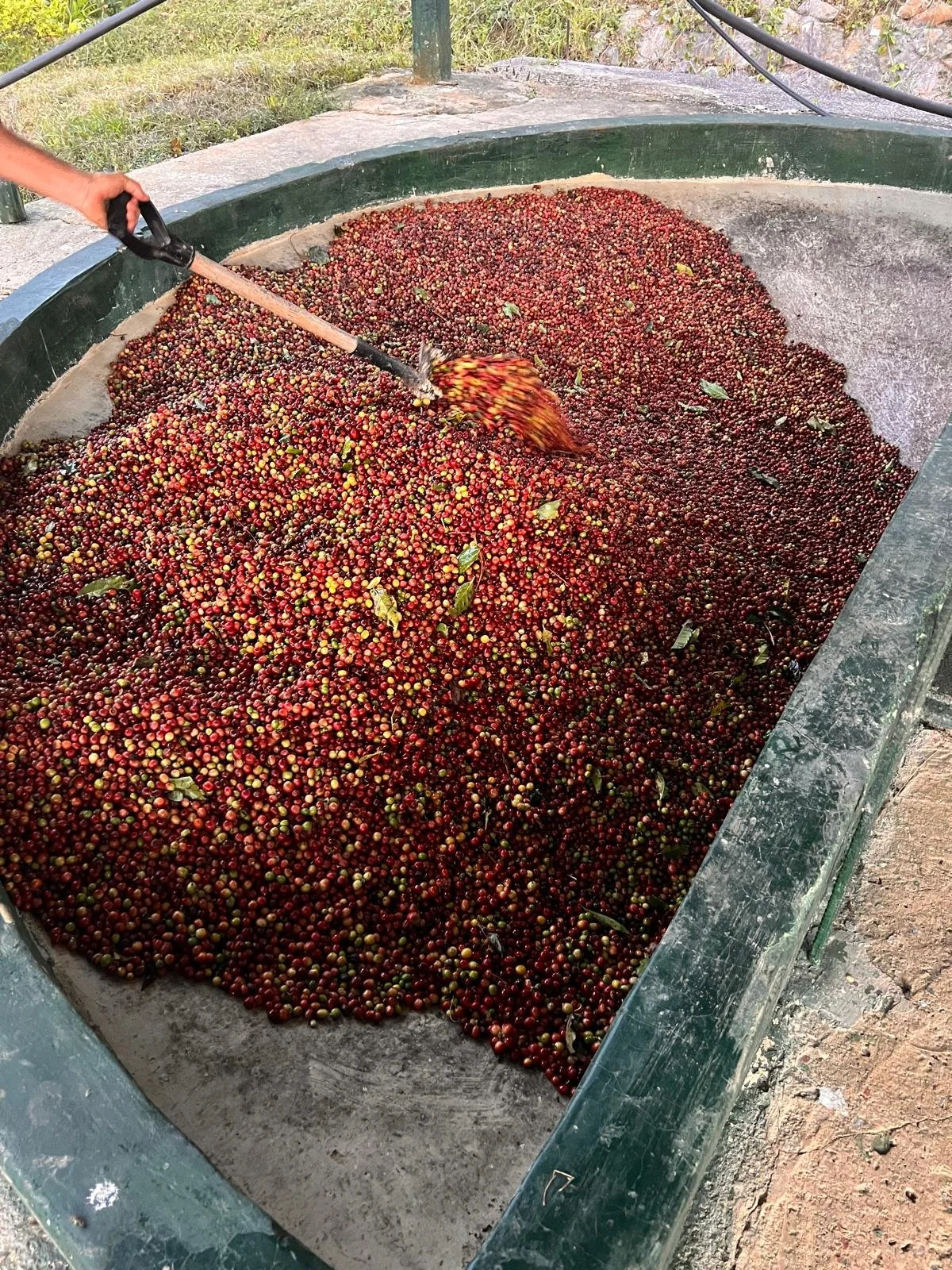
The processing chain includes:
fermentation,
washing,
drying,
compost recovery,
and traceable export logistics.
According to the project:
“100% of the water is recycled after being in holding tanks. And all of the fruit is used as compost.”
This closed-loop processing model significantly reduces waste and environmental contamination.
After processing:
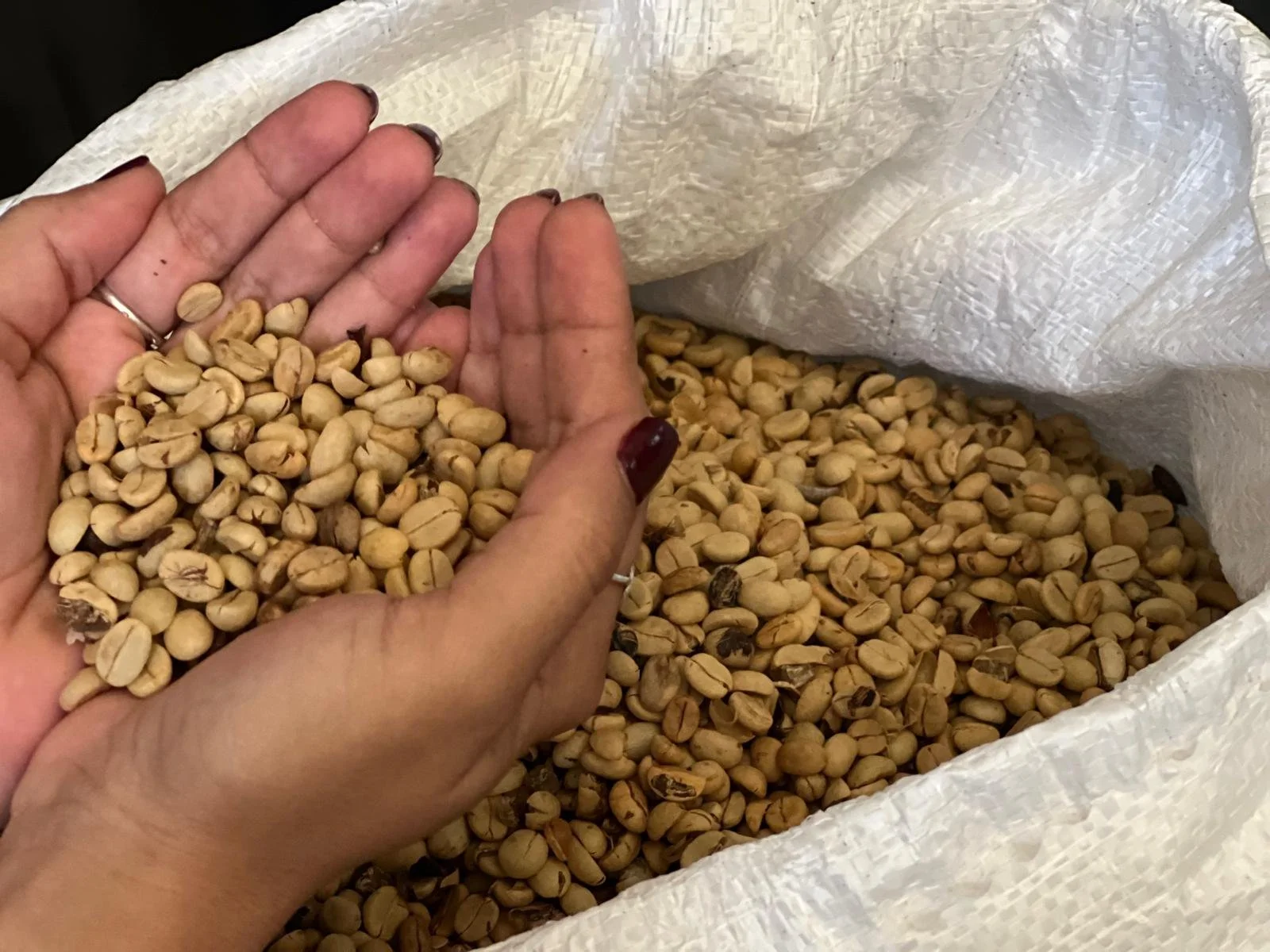
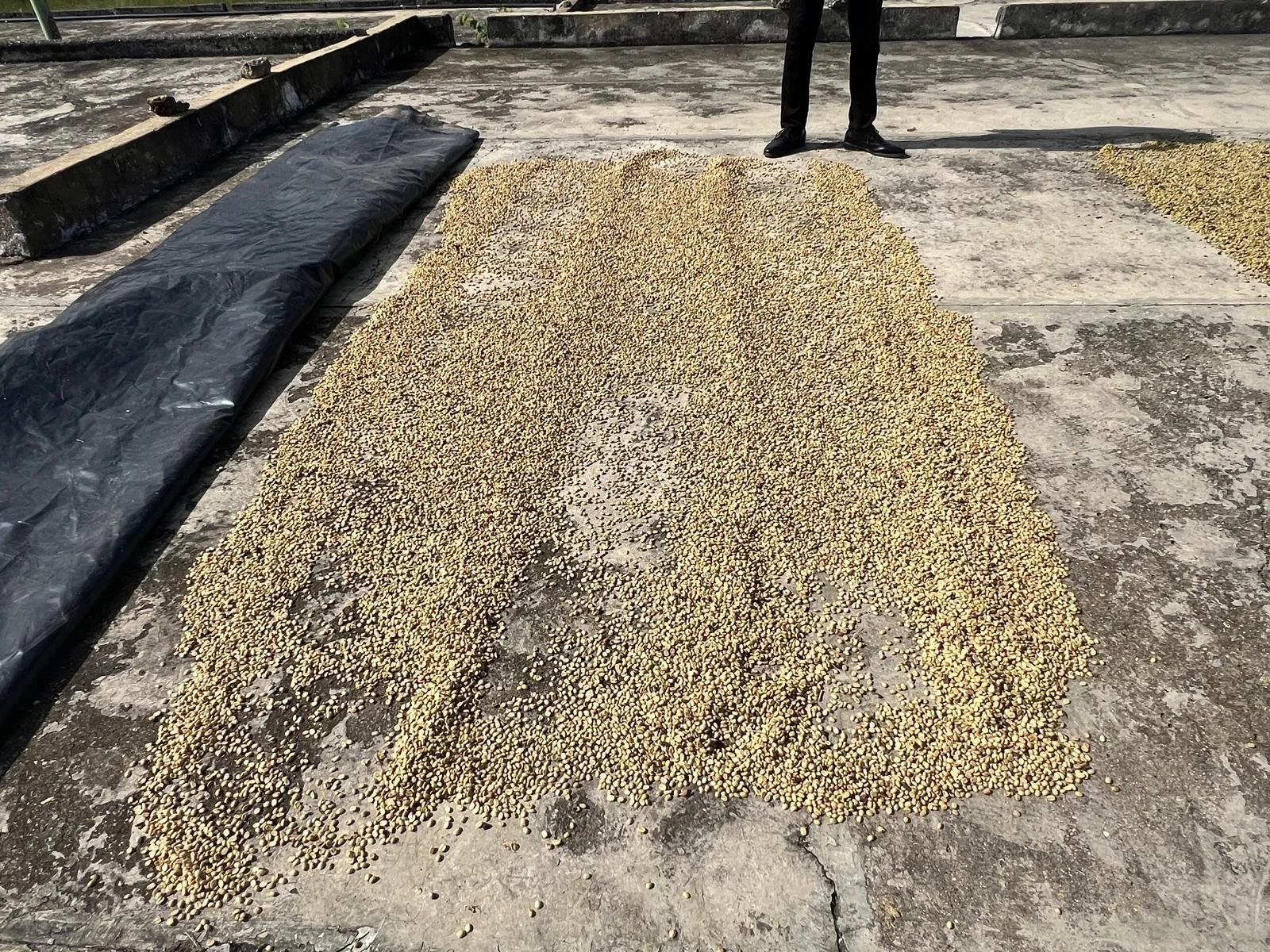
the beans are dried on open pads,
packed into 60kg jute sacks,
and transported to Mariel Port for export.
The coffee reportedly maintains full traceability back to the farm level.
This is particularly significant because traceability remains relatively uncommon in Cuban agricultural exports compared to many contemporary specialty coffee origins.
A Coffee Designed for Cigars
Pinarica Coffee was conceived specifically with cigar pairing in mind.
The coffee is roasted to a medium-dark profile in order to preserve origin characteristics while still achieving enough body and sweetness to complement cigars.
Andrew Ryan explained:
“There's a natural sweetness to it that pairs very well with cigars.”
This positioning is highly intelligent from a sensory standpoint.
Many dark-roasted coffees lose terroir definition and become dominated by roast-derived bitterness and carbon notes. By maintaining a medium-dark roast, Pinarica attempts to preserve:
sweetness,
earthiness,
cocoa notes,
tobacco-adjacent aromatics,
and regional character.
Given that the coffee grows near the same regions producing export cigar tobacco, there is also a symbolic and cultural continuity between the two products.
The pairing concept situates coffee not as an accessory, but as part of the broader Cuban ritual experience.
Rural Employment and Community Regeneration
One of the most important dimensions of Pinarica Coffee is its social impact model.
According to Ryan:
“We've gone from two staff locally a year and a half ago to over twenty staff now.”
In a rural community of roughly 800 people, this scale of employment has meaningful economic consequences.
The project explicitly frames itself as an intervention against rural depopulation and economic collapse — problems Cuba shares with many post-crisis agricultural societies.
Ryan compared the situation directly to rural Ireland in the 1980s, where emigration hollowed out small towns and villages.
The project aims to create reasons for younger generations to remain in rural communities rather than relocating to Havana or emigrating abroad.
Education, Solar Power, and Humanitarian Work
Pinarica Coffee also intersects with the La Ceiba Cubana charitable initiative, founded alongside Andrew Ryan’s wife Nicola.
Initially focused on arts education in rural schools, the project evolved into broader humanitarian support after witnessing severe shortages across Cuba.
These shortages reportedly include:
medication scarcity,
prolonged electrical outages,
infrastructure collapse,
and limited medical access.
The initiative raised funding for solar panel installations in local schools suffering from power outages that sometimes lasted twenty to thirty consecutive hours.
Funds have also been directed toward rural health clinics and essential medications.
The project therefore exists at the intersection of:
specialty agriculture,
ethical sourcing,
rural development,
and humanitarian engagement.
Cuban Coffee in a Global Context
Cuban coffee has historically occupied an unusual position internationally.
Despite Cuba’s strong agricultural reputation, coffee exports have remained relatively limited compared with countries such as:
Colombia,
Brazil,
Ethiopia,
Guatemala,
or Costa Rica.
Several factors contributed to this:
infrastructure limitations,
trade embargoes,
export restrictions,
economic centralisation,
and domestic consumption demands.
Pinarica Coffee therefore represents part of a broader effort to reposition Cuban coffee within the global specialty market.
Its emphasis on:
single-origin identity,
sustainability,
traceability,
terroir,
and artisanal cultivation,
aligns closely with contemporary specialty coffee trends.
At the same time, the project maintains a distinctly Cuban agricultural identity rather than imitating external specialty coffee aesthetics.
The Future of Pinarica Coffee
The long-term significance of Pinarica Coffee may extend beyond coffee itself.
The project functions as a case study in how premium agricultural products can potentially support:
ecological restoration,
rural employment,
cultural preservation,
and local infrastructure development.
Its model integrates:
agroforestry,
traceable specialty production,
community reinvestment,
and international cultural positioning.
In many ways, Pinarica Coffee represents a modern reinterpretation of traditional Cuban agriculture — one that attempts to balance commercial viability with environmental and social responsibility.
At a time when industrial coffee production increasingly faces criticism for deforestation, chemical dependency, and exploitative labour practices, the Pinarica approach offers a compelling alternative grounded in slower agriculture, regional identity, and ecosystem stewardship.
Whether viewed through the lens of specialty coffee, sustainability, Cuban culture, or premium cigar pairing, Pinarica Coffee stands as a remarkably multidimensional project emerging from one of the most historically resonant agricultural regions in the world.
