How a Cigar Becomes “Cigar of the Year”: Blind Tasting, Hard Evidence, and a 60th-Anniversary Perfecto
In a world where packaging, brand mythology, and price tags can quietly steer perception, the most interesting question is methodological: how do you judge a cigar as objectively as possible? One prominent approach treats cigar evaluation less like a lifestyle poll and more like a controlled sensory experiment—blind tasting, repeated, and structured as a “tournament of champions.”
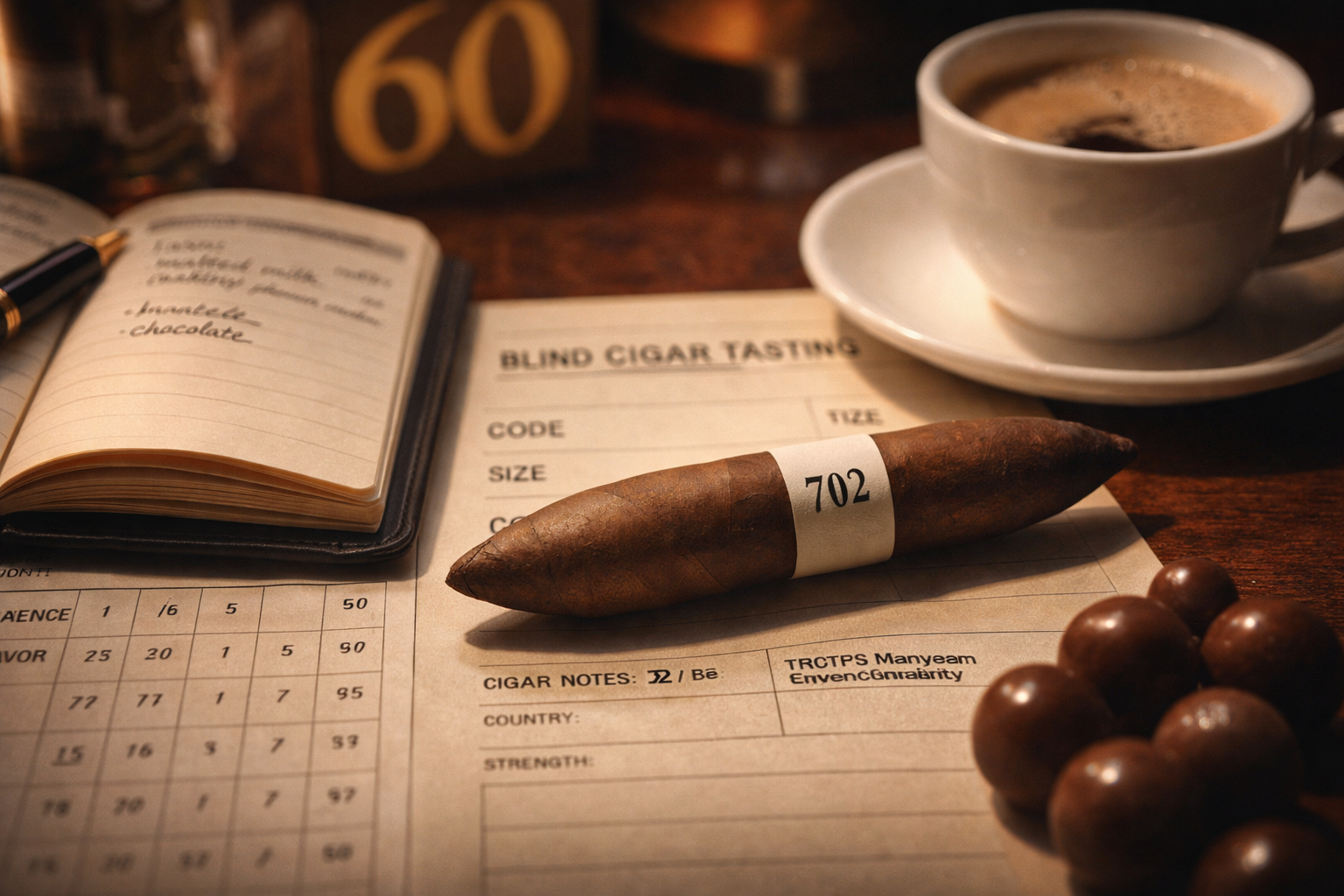
The core principle is simple: remove bias. Cigars are purchased at retail, their bands removed, and replaced with coded, generic bands before being handed to the tasting panel. Reviewers are deliberately kept ignorant of origin, maker, blend, and cost, so the score is driven by combustion, balance, evolution, and overall pleasure rather than reputation. This system has been used since the magazine’s first issue in 1992, giving the process the one thing enthusiasts rarely get in a hype-driven market: consistency across decades.
Selection into the annual Top 25 is not a single lucky performance. A cigar must first score at least 92 points during the year (in regular tastings or the Cigar Insider newsletter) and then prove itself again in an additional blind tasting designed specifically to rank the finalists. The result is framed as a “tournament of champions,” where only cigars that repeat excellence under the same constraints reach the list—and the highest performer becomes No. 1.
That No. 1 for 2025 was the Padrón 60th Anniversary Perfecto, scoring 97 points. Its backstory reads like a compressed history of modern premium cigars: José Orlando Padrón, raised in Cuba’s Pinar del Río among farm-grown tobacco and family rolling traditions, left Cuba in 1961, and by 1964 opened a modest factory in Miami’s Little Havana—selling cigars for a quarter, with no visible hint of the legacy to come. Today the company is run by his descendants, led by his son Jorge, and the 60th anniversary became the occasion to attempt something commemorative—and technically demanding.
Perfectos taper at both ends, making them famously difficult to roll well. This one is only the second perfecto shape the company has ever released commercially. The sensory description is also unusually concrete: an immediate intensity of flavor, a draw that opens after the narrow foot, then a sequence of malted milk, café-au-lait creaminess, and chocolate—developing “inch by inch,” with the kind of progressive complexity that makes putting it down feel irrational. Technically, it’s a 6 1/2” by 56 Nicaraguan puro at medium-full strength, priced at $75—an unabashed luxury object, but one that earned its status under blind conditions.
What makes the story richer is that the same issue also confronts the opposite end of the market: 24 handmade cigars priced at $7 or less, identified by combing a year’s worth of blind-tasting scores for value. Even these “budget” picks had to score between 87 and 92 points, spanning strength levels, brands, and formats (including not just short smokes but also toros, 6-by-60s, and even a Churchill). In other words, the method does not merely crown kings; it also maps the terrain where everyday pleasure remains possible—even as prices rise and bargains get harder to find.